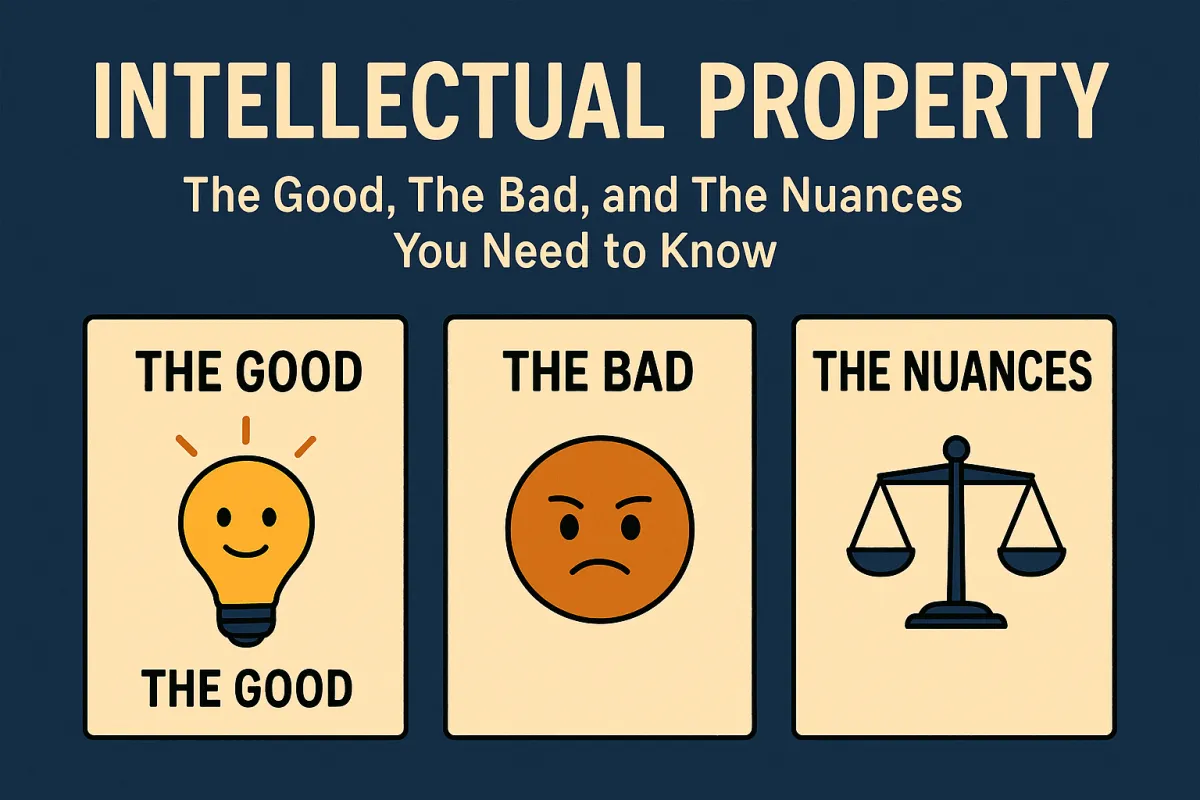
Educational digital illustration showing the good, bad, and nuances of intellectual property with icons and legal themes.

Intellectual Property: The Good, The Bad, and The Nuances You Need to Know

March 29, 20255 min read

Intellectual Property: The Good, The Bad, and The Nuances You Need to Know

What is Intellectual Property (IP)?

Intellectual Property: The Good, The Bad, and The Nuances You Need to Know  What is Intellectual Property (IP)?  Intellectual Property (IP) refers to creations of the mind, such as inventions; literary and artistic works; designs; and symbols, names and images used in commerce. It's a legal construct that grants exclusive rights to creators for a period of time, allowing them to benefit from their creations. These rights are usually categorized into:  Patents: Protect new inventions (processes, machines, manufactures, compositions of matter).  Copyright: Protects original works of authorship (books, music, art, software).  Trademarks: Protect brands and logos used to identify and distinguish goods or services.  Trade Secrets: Confidential information that gives a business a competitive edge (formulas, practices, designs).  The Good: Why IP Matters  Incentivizes Innovation: IP laws provide a financial incentive for creators to invest time, resources, and effort into developing new ideas. Knowing they can profit from their work encourages risk-taking and breakthroughs.  Economic Growth: IP-driven industries are significant contributors to economic growth, creating jobs, generating revenue, and fostering technological advancement.  Consumer Protection: Trademarks help consumers identify and trust the source of goods and services, ensuring quality and preventing confusion.  Promotes Transparency: Patent applications, once published, make inventions available to the public, fostering further innovation and building upon existing knowledge.  Attracts Investment: Companies with strong IP portfolios are more attractive to investors, as IP represents a valuable asset and potential for future revenue.  SEO Keywords for "The Good": innovation, economic growth, consumer protection, investment, patent, trademark, copyright, trade secret, incentivizes, financial incentive  The Bad: Potential Drawbacks of IP  Monopolies and Reduced Competition: IP rights grant exclusive control, which can lead to monopolies and stifle competition. This can result in higher prices for consumers and slower innovation in some cases.  Patent Trolling/Assertion Entities (PAEs): These entities acquire patents solely to assert them against companies, often without ever developing or commercializing the underlying technology. This can drain resources and hinder innovation.  Copyright Overreach: Overly broad or lengthy copyright terms can restrict access to knowledge and cultural works, limiting creativity and hindering the public domain.  Barriers to Entry: Strong IP portfolios can create barriers to entry for smaller companies or startups, making it difficult for them to compete with established players.  Geographic Disparities: IP laws and enforcement vary across countries, leading to challenges in protecting IP rights internationally and potentially disadvantaging creators in developing nations.  SEO Keywords for "The Bad": monopoly, competition, patent troll, copyright, barriers to entry, legal fees, challenges, expensive, enforcement, disadvantages  The Nuances: Navigating the Complexities of IP  Balancing Interests: The key to a healthy IP system is striking a balance between protecting the rights of creators and promoting the public good. This requires careful consideration of the scope and duration of IP rights.  Strategic IP Management: Businesses need to develop a strategic approach to IP management, including identifying, protecting, and enforcing their IP rights.  Open Source and Creative Commons: These licensing models offer alternative approaches to IP, promoting collaboration and sharing of knowledge.  Ethical Considerations: It's important to consider the ethical implications of IP rights, such as access to essential medicines or the preservation of cultural heritage.  Evolving Landscape: The digital age presents new challenges to IP law, requiring ongoing adaptation and innovation to address issues such as online piracy and the protection of digital content.  SEO Keywords for "The Nuances": balance, strategic, open source, creative commons, ethics, digital age, online piracy, licensing, evolving, intellectual property strategy, fair use, public domain, enforcement  Curry's Corner: A Tasty Analogy  Think of intellectual property like a delicious curry recipe.  The Good: The chef, who created the unique blend of spices and cooking method, has the right to protect their recipe (like a trade secret) and open a successful restaurant, offering a truly unique culinary experience. This encourages others to experiment with flavors and create their own unique curries.  The Bad: What if that chef became a "curry troll," aggressively suing anyone who uses even a similar spice blend, even if it's a traditional ingredient used in other dishes? Or what if they copyrighted the idea of a curry, preventing anyone else from making similar food? This would stifle culinary innovation.  The Nuances: Maybe the chef decides to license their recipe to other restaurants for a fee, allowing more people to enjoy it while still earning royalties. Or perhaps they share a simplified version of the recipe under a Creative Commons license, encouraging others to adapt and improve upon it.  Key Takeaways:  Intellectual property is a powerful tool that can foster innovation and economic growth.  However, it's important to be aware of the potential drawbacks, such as monopolies and barriers to entry.  A balanced and strategic approach to IP management is essential for both creators and society as a whole.  Optimizing for Google:  Target Keywords: "Intellectual property," "IP rights," "patents," "copyright," "trademarks," "trade secrets," "IP law," "intellectual property strategy," "intellectual property rights," "protecting intellectual property"  Long-Tail Keywords: "Benefits of intellectual property," "drawbacks of intellectual property," "how to protect intellectual property," "what is intellectual property," "intellectual property for startups"  High-Quality Content: Provide in-depth, informative, and engaging content that addresses user queries thoroughly.  Clear Structure: Use headings, subheadings, and bullet points to improve readability.  Internal and External Links: Link to relevant resources within your website and to authoritative sources.  Image Optimization: Use relevant images and optimize them with alt text.  Meta Description: Write a compelling meta description that accurately summarizes the content and encourages clicks.  Mobile-Friendly: Ensure your website is mobile-friendly.  Page Speed: Optimize your website's loading speed.  By following these guidelines, you can create a valuable resource about intellectual property that ranks well in Google search results. Remember to regularly update your content to stay current with the latest developments in IP law and practice.

Intellectual Property (IP) refers to creations of the mind, such as inventions; literary and artistic works; designs; and symbols, names and images used in commerce. It's a legal construct that grants exclusive rights to creators for a period of time, allowing them to benefit from their creations. These rights are usually categorized into:

  • Patents: Protect new inventions (processes, machines, manufactures, compositions of matter).

  • Copyright: Protects original works of authorship (books, music, art, software).

  • Trademarks: Protect brands and logos used to identify and distinguish goods or services.

  • Trade Secrets: Confidential information that gives a business a competitive edge (formulas, practices, designs).

The Good: Why IP Matters

  • Incentivizes Innovation: IP laws provide a financial incentive for creators to invest time, resources, and effort into developing new ideas. Knowing they can profit from their work encourages risk-taking and breakthroughs.

  • Economic Growth: IP-driven industries are significant contributors to economic growth, creating jobs, generating revenue, and fostering technological advancement.

  • Consumer Protection: Trademarks help consumers identify and trust the source of goods and services, ensuring quality and preventing confusion.

  • Promotes Transparency: Patent applications, once published, make inventions available to the public, fostering further innovation and building upon existing knowledge.

  • Attracts Investment: Companies with strong IP portfolios are more attractive to investors, as IP represents a valuable asset and potential for future revenue.

SEO Keywords for "The Good": innovation, economic growth, consumer protection, investment, patent, trademark, copyright, trade secret, incentivizes, financial incentive

The Bad: Potential Drawbacks of IP

  • Monopolies and Reduced Competition: IP rights grant exclusive control, which can lead to monopolies and stifle competition. This can result in higher prices for consumers and slower innovation in some cases.

  • Patent Trolling/Assertion Entities (PAEs): These entities acquire patents solely to assert them against companies, often without ever developing or commercializing the underlying technology. This can drain resources and hinder innovation.

  • Copyright Overreach: Overly broad or lengthy copyright terms can restrict access to knowledge and cultural works, limiting creativity and hindering the public domain.

  • Barriers to Entry: Strong IP portfolios can create barriers to entry for smaller companies or startups, making it difficult for them to compete with established players.

  • Geographic Disparities: IP laws and enforcement vary across countries, leading to challenges in protecting IP rights internationally and potentially disadvantaging creators in developing nations.

SEO Keywords for "The Bad": monopoly, competition, patent troll, copyright, barriers to entry, legal fees, challenges, expensive, enforcement, disadvantages

The Nuances: Navigating the Complexities of IP

  • Balancing Interests: The key to a healthy IP system is striking a balance between protecting the rights of creators and promoting the public good. This requires careful consideration of the scope and duration of IP rights.

  • Strategic IP Management: Businesses need to develop a strategic approach to IP management, including identifying, protecting, and enforcing their IP rights.

  • Open Source and Creative Commons: These licensing models offer alternative approaches to IP, promoting collaboration and sharing of knowledge.

  • Ethical Considerations: It's important to consider the ethical implications of IP rights, such as access to essential medicines or the preservation of cultural heritage.

  • Evolving Landscape: The digital age presents new challenges to IP law, requiring ongoing adaptation and innovation to address issues such as online piracy and the protection of digital content.

SEO Keywords for "The Nuances": balance, strategic, open source, creative commons, ethics, digital age, online piracy, licensing, evolving, intellectual property strategy, fair use, public domain, enforcement

Curry's Corner: A Tasty Analogy

Think of intellectual property like a delicious curry recipe.

  • The Good: The chef, who created the unique blend of spices and cooking method, has the right to protect their recipe (like a trade secret) and open a successful restaurant, offering a truly unique culinary experience. This encourages others to experiment with flavors and create their own unique curries.

  • The Bad: What if that chef became a "curry troll," aggressively suing anyone who uses even a similar spice blend, even if it's a traditional ingredient used in other dishes? Or what if they copyrighted the idea of a curry, preventing anyone else from making similar food? This would stifle culinary innovation.

  • The Nuances: Maybe the chef decides to license their recipe to other restaurants for a fee, allowing more people to enjoy it while still earning royalties. Or perhaps they share a simplified version of the recipe under a Creative Commons license, encouraging others to adapt and improve upon it.

Key Takeaways:

  • Intellectual property is a powerful tool that can foster innovation and economic growth.

  • However, it's important to be aware of the potential drawbacks, such as monopolies and barriers to entry.

  • A balanced and strategic approach to IP management is essential for both creators and society as a whole.

Optimizing for Google:

  • Target Keywords: "Intellectual property," "IP rights," "patents," "copyright," "trademarks," "trade secrets," "IP law," "intellectual property strategy," "intellectual property rights," "protecting intellectual property"

  • Long-Tail Keywords: "Benefits of intellectual property," "drawbacks of intellectual property," "how to protect intellectual property," "what is intellectual property," "intellectual property for startups"

  • High-Quality Content: Provide in-depth, informative, and engaging content that addresses user queries thoroughly.

  • Clear Structure: Use headings, subheadings, and bullet points to improve readability.

  • Internal and External Links: Link to relevant resources within your website and to authoritative sources.

  • Image Optimization: Use relevant images and optimize them with alt text.

  • Meta Description: Write a compelling meta description that accurately summarizes the content and encourages clicks.

  • Mobile-Friendly: Ensure your website is mobile-friendly.

  • Page Speed: Optimize your website's loading speed.

Emmanuel Simms is a professional film producer, transmedia storyteller, and mental health advocate. As the founder of The Eudaimonia Project, Emmanuel focuses on mental health advocacy through storytelling, community events, and creative content. He is the co-creator of projects like "State of Mind" and "The Pettys Cartoon (Part 1)" and leads initiatives like the "Caw to Action" event with the Baltimore Ravens and United Way. Known for his innovative approach, Emmanuel is passionate about empowering minds, fostering collaboration, and creating impactful narratives across various media platforms.

Emmanuel Simms

Emmanuel Simms is a professional film producer, transmedia storyteller, and mental health advocate. As the founder of The Eudaimonia Project, Emmanuel focuses on mental health advocacy through storytelling, community events, and creative content. He is the co-creator of projects like "State of Mind" and "The Pettys Cartoon (Part 1)" and leads initiatives like the "Caw to Action" event with the Baltimore Ravens and United Way. Known for his innovative approach, Emmanuel is passionate about empowering minds, fostering collaboration, and creating impactful narratives across various media platforms.

LinkedIn logo icon
Instagram logo icon
Youtube logo icon
Back to Blog